How Car Batteries Die
A car battery stores chemical energy and delivers high current for starting. After the engine starts, the alternator supplies power and recharges the battery, but it does not “fix” a battery that has already lost capacity. Many failures show up as slow cranking, then a no-start, often after a period of short trips or heavy electrical use.
Battery health depends on more than brand and price. Lead-acid batteries age faster with heat, vibration, and deep discharges. Cold weather increases the current needed to crank, which can expose a battery that still reads “okay” on a quick glance. If your car has a start-stop system, the battery is typically designed for more cycling, yet it still suffers when the charging system cannot recover after repeated short drives.
Practical example: leaving a dome light on for an hour can drain enough to cause a slow crank, especially on a battery that is already a year or two into its decline. Another common pattern is driving 5–10 minutes, parking, and repeating; the alternator may not bring the battery back to full charge before the next start.
Main Problems And Pain Points
People often treat battery problems as a single event, then miss the dependency chain that leads to it. A weak battery can be caused by age, but it can also be caused by repeated undercharging, which is usually tied to driving patterns and electrical loads. The charging system includes the alternator, voltage regulator, battery temperature behavior, and wiring/ground connections; a small issue in any part can shift the battery into a chronic low-charge state.
Short trips are a frequent culprit because the alternator needs time and engine load to raise battery voltage and recharge the battery. A battery that sits at a partial state of charge loses capacity over time, and sulfation can form on the plates. That sulfation is not always reversible, which is why “it started yesterday” can still end with a no-start later.
Parasitic drain is another recurring misunderstanding. Some drains are normal, like memory retention for the radio or control modules, but excessive drain can come from a stuck relay, a failing switch, or aftermarket accessories. Many cars also have a sleep/wake cycle; if you measure drain right after locking the car, you can catch it before the modules fully sleep, which makes the reading look worse than it is.
Heat is the silent multiplier. A battery in a hot climate can age faster even with perfect habits, and a battery under the hood near exhaust components can run hotter than the same model in a cooler region. If your battery is in an engine bay that routinely sees high temperatures, you may need to be more consistent with charging and testing.
Solutions And Advice
Drive Long Enough To Recharge
After a start, the alternator typically returns the battery toward full charge, but short drives often do not. A practical habit is to combine errands so the engine runs long enough for the charging system to recover the battery. If your routine is mostly 5–10 minute trips, a battery maintainer can help during storage or long gaps; a common target is a low-current charger that switches to float mode when the battery reaches a safe voltage.
As a side observation, many battery maintainers show a charging status LED and sometimes a model number on the label; on one unit I reviewed in 2024, the manual listed a float stage that activates after the bulk stage. That kind of staged charging matters because it reduces the time the battery spends at high current.
Check For Parasitic Drain
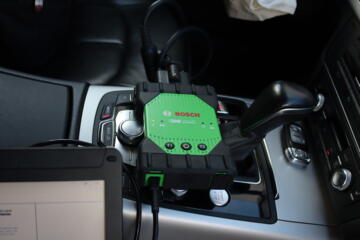
Use a multimeter or a dedicated battery drain tester if you suspect something stays on after the car is off. The key method detail is to wait for the car to enter its sleep state before recording current draw; the sleep time varies by vehicle and can be 20–60 minutes. If you see a steady draw far above normal, you can narrow the cause by removing fuses one at a time, watching the meter for a drop.
Realistic outcome: a healthy modern car often settles into a low milliamp range after sleep, while a stuck accessory can push current into the hundreds of milliamps. The exact “normal” number depends on the model, so compare your readings to a baseline from the same vehicle when it is known to be healthy.
Use Safe Jump-Start Habits
Jump-starting is a common trigger for mistakes that worsen battery health. Avoid repeated jump attempts without letting the donor vehicle run; repeated cranking can overheat cables and stress the battery. If your car has a smart charging system, follow the jump-start procedure in the owner’s manual, including correct clamp placement and whether to start the donor first.
A mild frustration point: many jump-start instructions online skip the “wait time” between attempts, and that omission can lead to a battery that never recovers. If the battery is deeply discharged, a short jump may start the car but still leave the battery undercharged, which sets up the next failure.
Test Battery Health Before It Fails
Instead of guessing, test the battery with a load test or a conductance tester at a parts store or service center. A basic voltage reading can miss a failing battery because a surface charge can temporarily mask weakness. Load testing checks how the battery holds voltage under a simulated starting load, which correlates better with real-world cranking performance.
As an incidental detail, some testers display a “CCA” estimate and a pass/fail result; on one unit labeled “v3.2” in the store inventory, the screen showed both open-circuit voltage and a loaded voltage reading. That dual view helps you interpret results without relying on a single number.
Case Examples
Short Trips And Undercharging
An anonymized driver commutes with three stops: 6 minutes to the first store, 8 minutes to the next, then 10 minutes home. After a month of this routine, the car starts with a slower crank in the mornings. The battery test shows reduced capacity, and the alternator output is normal during longer drives. The fix is a habit change: combine errands into one longer trip twice a week and use a maintainer during weekends when the car sits.
The lesson is not that short trips “ruin” batteries instantly. The damage comes from repeated partial charge states that allow sulfation to build, and the battery’s ability to accept charge declines as it ages.
Parasitic Drain After Accessory Fit
An anonymized driver installs an aftermarket dash camera and a phone mount with a USB power tap. The car sits overnight and starts fine for a few days, then fails after a week. A drain test after sleep shows higher-than-expected current draw, and the fuse associated with the accessory circuit drops the draw when removed. The driver reroutes power through a switched circuit or uses a camera hardwire kit designed for proper sleep behavior.
The key point is that accessory wiring can bypass the car’s intended sleep logic. A camera that keeps recording or a module that never fully sleeps can drain the battery even when the car seems “off.”
Checklist And Comparison
| Habit | What It Targets | Pros | Limits |
|---|---|---|---|
| Longer drives | Undercharging after starts | Helps the alternator recover charge | Does not fix a bad alternator or a stuck drain |
| Battery maintainer | Storage and long gaps | Reduces deep discharge during inactivity | Wrong charger type can overcharge; follow the battery type and manual |
| Sleep-aware drain test | Parasitic draw | Identifies wiring or accessory issues | Requires patience; measuring too early gives misleading results |
| Load testing | Capacity and cranking performance | Better than voltage-only checks | Results depend on tester method and battery temperature |
Step-by-step checklist for the next 30 days: record your battery age and any recent jump-starts, note your typical trip length, then schedule a load test if you see slow cranking. If the car sits more than a few days, use a maintainer rather than relying on a single “good start.” If you suspect drain, lock the car and measure after it sleeps, not immediately after shutdown.
Common Mistakes
One mistake is relying on a quick voltage reading from a cheap meter. A battery can show a decent surface voltage while still failing under load, which delays the fix. Another mistake is charging a battery without checking the battery type and the vehicle’s charging strategy; some cars use sensors and charging profiles that do not match every charger.
People also leave accessories plugged in and forget them. A phone charger, a portable compressor, or a dash cam can draw power even when the car is off, depending on how it is wired. If you park for long periods, unplugging nonessential devices reduces the chance of a slow drain.
Jump-starting repeatedly without addressing the root cause is another trap. If the battery is already weak, a jump can start the car but still leave the battery undercharged. That pattern often ends with a second failure within days, especially in cold weather.
Finally, people sometimes ignore corrosion at terminals. Loose clamps and corrosion increase resistance, which causes voltage drop during cranking and can trigger charging system faults. Cleaning terminals and tightening connections to the manufacturer’s specs can prevent a “battery problem” that is actually a connection problem.
FAQ
How Often Should I Test My Battery?
Test it when you notice slow cranking, after repeated jump-starts, or around the time the battery reaches its typical service-life window. If your car sees mostly short trips or extreme heat, test earlier and more often.
What Is A Parasitic Drain?
Parasitic drain is current draw from systems that remain active after the car is turned off. Normal drains drop after the vehicle enters sleep mode, while abnormal drains keep pulling power and can cause a no-start after days.
Can A Battery Be Saved After It Dies?
A battery can sometimes recover if it was only lightly discharged, but deep discharges and repeated undercharging often cause lasting capacity loss. A load test and charging behavior during testing help determine whether replacement is the realistic outcome.
Does Leaving Headlights On Kill The Battery?
Yes, headlights can drain a battery quickly because they draw significant current. The exact time depends on battery condition, temperature, and whether the car has an automatic shutoff feature.
Is A Battery Maintainer Safe For All Cars?
It is safe when the charger matches the battery type and follows the vehicle and charger instructions. Some cars require special care with charging leads and battery monitoring systems, so check the owner’s manual before connecting.
Author's Insight
Battery failures usually come from a pattern: undercharging, heat exposure, or a persistent drain that keeps the battery from reaching full charge. Voltage-only checks often miss the problem because a battery can read “fine” until a load test reveals weak capacity. The most reliable habits combine driving patterns with occasional testing, and they treat accessories as part of the electrical system rather than harmless add-ons.
When you measure drain, waiting for the car’s sleep state matters as much as the meter reading. When you jump-start, the goal is not just to start the engine, but to avoid leaving the battery in a chronically low-charge condition.
Key Takeaways
- Short trips and repeated partial charge states accelerate battery aging, especially in heat and cold.
- Parasitic drain checks must wait for the vehicle to sleep; measuring too early gives misleading results.
- Use load testing instead of voltage-only guesses when you suspect a weak battery.
- Jump-start carefully and address the cause so the battery can recover charge after starting.
- Treat aftermarket accessories and charging taps as potential drain sources, not just convenient add-ons.