Clear A Clogged Drain Fast
A clogged drain usually forms when water carries solids into a pipe, then the solids collect where flow slows. Hair and soap scum build a mat, grease cools and sticks to pipe walls, and food particles can create a partial plug in kitchen lines. In many homes, a typical sink trap holds about 4–6 in. of water, so a clog often shows up as slow draining or gurgling before it fully backs up.
Use this quick, chemical-free sequence: remove the visible blockage, break up the clog mechanically, then flush with warm water. The goal is to restore flow without adding corrosive chemicals that can damage plumbing or create hazardous fumes.
Skip harsh chemicals first. They add risk.
Main Problems People Create
People often treat a clog as a single “thing” instead of a layered blockage. A kitchen drain may start with grease on the walls, then catch food fibers, then trap hair at the trap. A bathroom drain can look clear at the top while the trap and the first section of pipe hold a dense hair-and-soap plug.
Another common mistake is using chemicals when the clog is downstream of the trap. If the blockage sits in a vented section, chemicals may not reach it, and the product can sit in the trap instead, increasing exposure risk. Chemicals can also loosen deposits in one spot while pushing them deeper, which turns a slow drain into a full backup.
Skip the timer apps. They add one more thing to manage.
Biologically, the “smell” from a drain is often not just waste; it can come from trapped water and biofilm in the pipe. Biofilm is a thin layer of microorganisms that adheres to surfaces and can trap grease and hair. When flow stops, gases can build behind the clog, which is why you may hear gurgling or see bubbles.
No Harsh Chemical Solutions
Start With The Trap Check
Look under the sink for the P-trap and check for standing water, leaks, or an obvious blockage. If you can access the trap, place a bucket under it and use a pair of gloves; then loosen the slip nuts and remove the trap carefully. This works because many clogs start in the trap where solids settle. In practice, you may pull out a compact hair-and-soap mass or a grease plug that smells strongly, and you can rinse it into the trash rather than the drain.
Use warm water, not boiling. It reduces splashing.
Use A Plunger With Fit
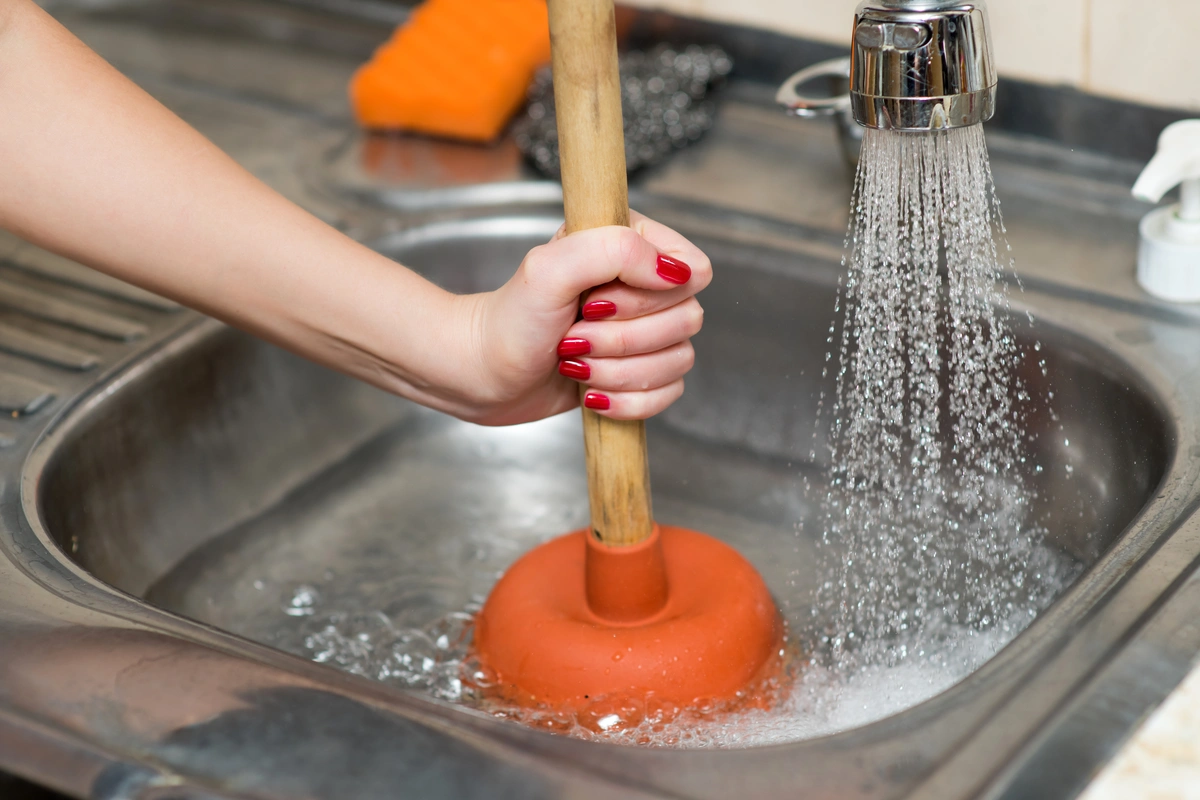
Choose the right plunger type: a cup plunger for sinks and a flange plunger for toilets. Seal the cup over the drain opening, then push and pull with steady pressure for 20–30 strokes. This works by creating pressure waves that can dislodge a partial plug in the trap or the first run of pipe. If the water level drops quickly and flow improves, you’re likely clearing a blockage near the fixture.
Pressure waves beat chemicals. They move solids.
Use A Hair Tool Or Brush
For bathroom drains, remove the drain cover and use a hair grabber, drain brush, or a bent wire tool to pull out the mat. This works when the clog is at the opening or inside the strainer where hair accumulates. In practice, you may find a thick coil that holds soap residue; removing it often restores flow immediately. If the drain is a tub with an overflow plate, check both the main drain and the overflow path, since hair can collect in either route.
Small tools work fast. They beat fumes.
Flush With Warm Water Timing
After mechanical removal, flush with warm water in short bursts. Warm water helps dissolve some grease and soap residue, but it does not “melt” hardened fat instantly. A practical approach is to run warm water for 30–60 seconds, pause, then repeat once or twice while watching for slowdowns. If the drain clears after a burst and stays clear, the clog was likely localized.
Warm bursts reduce mess. They also test flow.
Use Baking Soda Carefully
Baking soda and vinegar are sometimes suggested, but the reaction mainly produces carbon dioxide gas and can loosen light residue. It rarely clears a dense hair plug or a grease-packed line on its own, and it can create a foamy mess that hides whether the clog moved. If you use it, treat it as a mild pre-treatment after you remove visible debris, then follow with mechanical action or warm flushing. This keeps expectations realistic and avoids wasting time when the clog needs physical disruption.
Expect limited results. It’s not a solvent.
Know When To Call A Pro
Call a plumber if multiple fixtures back up at once, if water rises when you plunge, or if you suspect a main line clog. Those patterns can indicate a blockage beyond the trap, sometimes in the sewer line or a shared drain. A professional may use a motorized auger or a camera inspection to locate the blockage without repeated trial-and-error. If you rent, notify the landlord early when backups involve shared plumbing, since you may need permission for access.
Backups spread quickly. Act early.
Case Examples For Real Homes
Kitchen Sink Grease Plug
An anonymized household noticed slow draining after repeated cooking and rinsing with hot water. The trap held a greasy film and a compacted mix of food fibers, which smelled rancid when removed. The homeowner used a plunger first, then removed the P-trap and cleaned it, followed by two warm-water flushes. The drain cleared after the trap cleaning, which matched the pattern of a localized grease-and-debris clog.
Lesson: trap access matters. It often holds the answer.
Bathroom Tub Hair Mat
An anonymized renter had gurgling and slow tub drainage, with a visible hair mat under the strainer. The renter removed the strainer, pulled out the hair with a drain brush, then used a manual snake to break up remaining residue in the first bend. Warm-water flushing restored normal flow, and the gurgling stopped. The clog stayed gone because the renter also installed a hair catcher and cleaned it weekly, which reduced re-accumulation.
Lesson: prevent the repeat. Hair catches help.
Comparison Choices Checklist
| Method | Best For | What You’ll Notice | Main Limit |
|---|---|---|---|
| Trap cleaning | Clogs near the fixture | Debris comes out in hand | Not reachable if clog is farther |
| Plunger | Partial blockages | Water level changes during strokes | Fails on dense, deep plugs |
| Manual snake | Hair, paper, compact debris | You feel resistance and rotation helps | May not clear main-line clogs |
| Warm flush | Grease and soap residue | Flow improves after bursts | Does not remove solid plugs |
| Chemical drain opener | Some organic buildup | Fumes or heat may occur | Burn risk and limited reach |
Decision rule: start with the method that matches where the clog likely sits, then stop once flow returns.
Skip the timer apps. They add one more thing to manage.
Common Waste Time Mistakes
Pouring chemicals repeatedly is a frequent error. If the first dose does not restore flow, the clog likely needs mechanical disruption, and repeated dosing increases exposure risk and can damage older pipes. Another mistake is using boiling water on PVC or on fixtures with plastic components; heat can deform some materials and worsen leaks.
People also plunge without sealing. A poor seal wastes pressure and can push water back up around the rim. If you plunge a sink, keep the overflow opening closed if it has one, since air leaks reduce the pressure wave.
Stop if you smell strong fumes. Ventilate immediately.
FAQ
Can I Use Vinegar And Baking Soda?
Vinegar and baking soda can loosen light soap residue, but they rarely clear hair mats or grease-packed plugs by themselves. Use them only after you remove visible debris, then follow with warm flushing or a snake.
What If The Sink Backs Up?
If water rises or backs up, stop and switch to trap access or a snake if you can do so safely. Persistent backups can indicate a clog beyond the trap, which often needs professional equipment.
Are Drain Chemicals Safe For Pipes?
Many drain chemicals are corrosive and can damage plumbing finishes and some pipe materials, especially with repeated exposure. They also create burn and inhalation hazards, so mechanical methods are safer for most household clogs.
How Long Should I Plunge?
Try 20–30 controlled strokes with a good seal, then pause to check the water level. If there is no change, move to trap cleaning or a snake rather than continuing indefinitely.
When Should I Call A Plumber?
Call a plumber if multiple fixtures back up, if you suspect a main-line clog, or if you cannot clear the blockage after trap cleaning and a manual snake. A camera inspection can confirm the location before more work.
Author's Insight
Most fast “no-chemical” drain fixes work because they target the clog’s physical location: the trap, the first bend, or the strainer. Chemicals often fail when the blockage sits behind a trap or when grease and hair form a dense mat that does not dissolve quickly. A careful sequence—remove what you can reach, then use pressure waves or a snake—reduces both risk and guesswork. If the same fixture keeps clogging, the pattern usually points to a recurring source like hair, grease habits, or venting issues.
One small change beats repeated dosing.
Key Takeaways
Start with trap access, then use a plunger with a proper seal or a manual snake to break the blockage. Warm-water flushing helps after debris removal, while baking soda and vinegar are mild and limited for dense clogs. Avoid harsh chemicals when you can, because they pose burn and inhalation risks and may not reach the clog.