Circuit Breaker Ratings
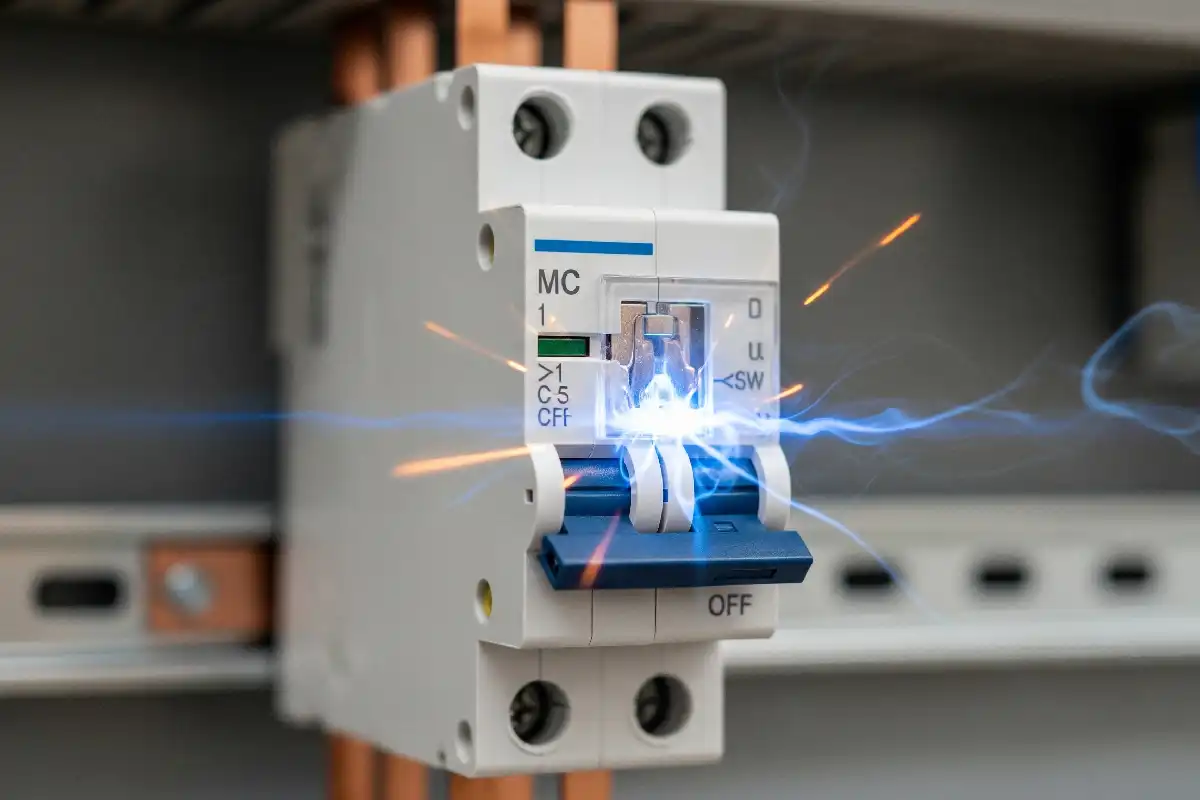
Circuit breakers are thermal-magnetic switches that interrupt current when conditions exceed their design limits. The rating stamped on the breaker—commonly in amperes (A)—describes the maximum current the device can carry under specified conditions without tripping. The breaker also has a trip curve, so two breakers with the same amp rating can trip at different times depending on the fault level and whether the overload is fast or slow.
Watts (W) describe power, not a breaker’s direct setting. You convert watts to amps using the circuit voltage and the load’s power factor. On a typical North American branch circuit, voltage is often 120 V (small appliances, lighting) or 240 V (ranges, dryers, some HVAC). A 1500 W space heater at 120 V draws about 12.5 A if its load behaves like a resistive heater; a motor load at the same watts can draw higher current during startup.
Real-world examples help: a microwave might be labeled 1100 W, but its breaker sizing still depends on the nameplate current and the manufacturer’s instructions. A window air conditioner may list “cooling watts” that differ from electrical input watts, and the breaker must match the electrical input draw, not the heat removed from the room.
One practical aside: if you’re reading a breaker label, the trip rating often includes “Type” or “curve” markings, and the panel schedule sometimes lists designations like “20A, 1-pole” or “30A, 2-pole.” On a panel I reviewed in 2024 (model number noted on the dead-front label), the printed schedule matched the breaker amperage but not the appliance wattage—because the appliance nameplate current was the real sizing reference.
Common Rating Mistakes
People often treat the breaker’s amp rating as if it were a watts rating. That leads to errors when voltage differs from what they assumed, when the load is not resistive, or when the load has a high inrush current. A breaker can trip even when the steady-state watts seem “under the limit,” because the trip mechanism responds to current magnitude and duration.
Another frequent mistake is adding watts across devices without converting to amps at the correct voltage. A 1500 W heater on a 120 V circuit and a 1500 W heater on a 240 V circuit do not draw the same current. The 240 V version draws roughly half the current, which changes how close you get to the breaker’s thermal limit.
Load type matters because power factor and starting behavior change the current waveform. Resistive loads like electric baseboard heaters have power factor near 1.0, so watts-to-amps conversion is close to direct. Inductive loads like refrigerators, compressors, and many power tools have power factor below 1.0 and draw higher current at startup; the breaker’s magnetic element reacts to that surge.
Supporting technologies also influence outcomes. The breaker’s trip curve, the wire gauge and insulation rating, and the panel’s busbar temperature all affect safe operation. If the wiring is undersized or connections are loose, heat can build up and cause nuisance trips or damage even when the breaker rating looks correct on paper.
One more dependency: continuous loads versus intermittent loads. Many electrical codes use a concept of continuous load—commonly defined as a load expected to run for three hours or more. Continuous loads are treated more conservatively because thermal heating accumulates, and the breaker’s thermal element has a time-dependent response.
How To Convert Amps To Watts
Use the circuit voltage and an estimate of power factor. For a single-phase circuit, the relationship between real power (watts) and current (amps) is tied to voltage and power factor. For resistive loads, power factor is near 1, so amps ≈ watts ÷ volts. For motor loads, power factor can be lower, and startup current can exceed running current by several multiples.
Practical method: start from the appliance nameplate current when available. Many appliances list “amps” directly, and that number already accounts for the load’s internal power factor and operating mode. If the nameplate lists watts only, convert using the circuit voltage and assume power factor near 1 only for resistive heating. For motors and electronics, treat watts-to-amps conversion as an estimate and rely on the nameplate current or manufacturer data.
Small aside from a troubleshooting session: a homeowner once added up “watts” from a smart plug app and compared it to a breaker label. The app showed “power” averaged over seconds, while the breaker reacted to short peaks during compressor start. The mismatch came from averaging and from the load’s inrush behavior, not from a wrong breaker rating.
Solutions And Advice
Start With Nameplate Current
Use the appliance’s electrical data plate as the primary source. Look for “Input,” “Amps,” “W,” and the rated voltage. If the label provides amps at 120 V or 240 V, compare that current to the breaker rating and to the panel’s load rules for continuous operation. If the label provides only watts, convert to amps using the circuit voltage and assume power factor near 1 only for resistive heating.
For tools and motors, check for a “running amps” and “locked-rotor amps” or a note about starting current. If the manufacturer does not provide those values, treat the load as having higher startup current and plan for intermittent use or a dedicated circuit.
Respect Continuous Load Rules
Many jurisdictions follow the National Electrical Code (NEC) approach that continuous loads should not exceed 80% of the circuit rating. In practice, that means a 20 A branch circuit is treated as 16 A for continuous loads. If you expect a device to run for hours—like a dehumidifier, heat tape, or a large aquarium heater—use the 80% rule when estimating total current.
Example: if you have a 20 A circuit and you want to run a 1500 W resistive heater continuously at 120 V, the heater draws about 12.5 A. That leaves about 3.5 A of headroom under the 16 A continuous limit, before you add other loads.
Account For Startup And Inrush
Motor-driven loads can trip breakers even when their running watts look modest. Startup current can be several times the running current for a fraction of a second, and the breaker’s magnetic trip element responds to that. If you have multiple motor loads on the same circuit, the combined inrush events can overlap and push the current beyond the trip curve.
Mitigation steps: separate high-inrush appliances onto different circuits, avoid running multiple compressors at the same time, and use manufacturer guidance for circuit requirements. If nuisance trips happen, record the time of day and which appliances were running; a pattern often points to overlapping startups rather than a steady overload.
Verify Wiring And Panel Limits
Breaker selection depends on wiring gauge, insulation temperature rating, and termination quality. A breaker that matches the circuit rating can still trip if connections are loose or if the wiring is damaged. Inspect for signs of overheating at the panel and receptacles, and confirm the wire gauge matches the circuit rating in the panel schedule.
Tools that help: a clamp meter for current measurement and a thermal camera for hotspot detection can reveal whether the circuit is drawing more than expected. If you measure current, sample during the load’s steady state and during startup; the difference often explains trips that seem inconsistent.
Case Examples
Kitchen Counter With Mixed Loads
An anonymized scenario: a household added a 120 V toaster oven labeled 1500 W and a 120 V kettle labeled 1200 W to the same kitchen circuit. They also used a microwave that drew about 1100 W. The breaker was rated 20 A, and the homeowner estimated total watts as 1500 + 1200 + 1100 = 3800 W, then assumed the breaker would never trip because “watts are under 20 A.” The error came from mixing watts and amps without conversion and from ignoring that the kettle and toaster oven are resistive while the microwave’s electronics can create short current peaks.
After checking nameplate amps, the homeowner found the kettle and toaster oven each drew close to 12–13 A. Running two at once pushed the circuit near the breaker’s thermal limit, and occasional microwave use overlapped with the kettle’s steady draw. The fix was to use one high-watt appliance at a time and to move the microwave to a different circuit where the panel schedule allowed it.
Garage Heater And Compressor
An anonymized scenario: a garage had a 240 V circuit with a 30 A breaker feeding a space heater and a separate refrigerator. The owner used the heater during cold mornings and noticed nuisance trips when the refrigerator compressor started. The heater was resistive, so its current matched the watts-to-amps conversion closely. The refrigerator’s startup current, however, created a brief surge that interacted with the heater’s steady current.
The owner reduced simultaneous operation by running the heater for pre-warming and then turning it down or off before the refrigerator cycled. They also confirmed the refrigerator was on a dedicated circuit when possible. The trips stopped after separating the overlapping inrush events, not after changing the breaker rating.
Checklist For Load Limits
| Parameter | What It Means | What To Compare | Common Misread |
|---|---|---|---|
| Breaker Amps (A) | Max current the breaker can carry without tripping under specified conditions | Total circuit current from nameplate amps and load timing | Treating it as a watts limit |
| Watts (W) | Real power consumed by the load | Convert to amps using voltage and power factor (or use nameplate amps) | Using averaged “watts” from apps to predict trips |
| Continuous Load | Load expected to run for 3+ hours | Use conservative sizing (often 80% of circuit rating) | Assuming short-term math applies to hours-long use |
| Startup/Inrush | Brief current surge when motors and some electronics start | Breaker trip curve behavior and overlap of multiple starts | Ignoring that running watts do not predict starting current |
Step-by-step checklist for a branch circuit load estimate:
- Confirm circuit voltage from the panel schedule or receptacle type (120 V vs 240 V).
- Collect nameplate amps for each device that will run together; record the voltage shown on each label.
- Mark which loads are continuous (3+ hours) and apply the conservative 80% rule when using NEC-style guidance.
- Identify motor/compressor loads and plan for startup overlap; treat them as higher risk for nuisance trips.
- Sum currents for the scenario you actually run, not for the maximum number of devices you could plug in.
- Measure with a clamp meter if the math feels uncertain; compare steady-state and startup current.
- Verify wiring gauge and breaker compatibility before changing any breaker rating.
Common Mistakes
Upgrading a breaker without verifying wire gauge is a frequent failure mode. A breaker rating must match the conductor ampacity and the installation rules; raising the breaker can overheat wiring during faults. If you see a breaker that does not match the wire size, treat that as a safety issue to correct with proper inspection.
Another mistake is using smart-plug “watts” readings to predict breaker trips. Many apps report averaged power over short intervals, while breaker trip behavior depends on instantaneous current and thermal accumulation. A device can show moderate average watts and still create brief peaks that trigger the magnetic element.
People also misread appliance labels that list “heating watts” or “cooling watts.” HVAC and dehumidification equipment often lists thermal output, not electrical input. The breaker must be sized to the electrical input current, which may be different from the heat removed from the air.
Finally, some homeowners assume that replacing a tripped breaker with a higher rating fixes nuisance trips. That approach can mask an underlying issue like loose connections, failing appliances, or a circuit overloaded beyond safe continuous limits.
FAQ
How Do I Convert Watts To Amps?
Use the circuit voltage and the load’s power factor. For resistive heaters, amps ≈ watts ÷ volts is usually close. For motors and electronics, use the nameplate amps when available because power factor and startup current change the relationship.
Does A Higher Watt Rating Mean A Bigger Breaker?
Watts describe the load’s power draw, not the breaker’s setting. Breaker sizing depends on the load’s current at the rated voltage and on whether the load is continuous or has high inrush. Use the nameplate amps and the circuit’s voltage to compare to the breaker rating.
Why Does My Breaker Trip With “Low” Power Use?
Short current peaks from motor startup, compressor cycling, or certain power supplies can trip the breaker even when average watts look low. Loose connections and wiring heating can also cause trips that appear unrelated to the measured steady load.
What Is The 80% Rule For Breakers?
Many NEC-style practices treat continuous loads as not exceeding 80% of the circuit rating. For a 20 A circuit, that means 16 A for loads expected to run for three hours or more. Local code interpretations can vary, so check the applicable code and guidance.
Can I Replace A Breaker With A Different Brand?
Breaker compatibility depends on the panel manufacturer’s approved list and the breaker type/curve. Using an unapproved breaker can create improper fit or incorrect trip behavior. Follow the panel’s labeling and the manufacturer’s instructions.
Author's Insight
Circuit breaker ratings connect electrical load behavior to thermal and magnetic trip mechanisms. Amps on the breaker label map directly to current limits, while watts require conversion using voltage and load characteristics. The most reliable sizing inputs come from appliance nameplate amps and the circuit’s voltage, then you apply conservative rules for continuous operation and account for motor startup overlap.
When calculations disagree with real trips, the mismatch usually comes from inrush current, averaging in power-monitor readings, or wiring/panel issues like loose terminations. A clamp meter reading during startup often explains nuisance trips faster than repeated breaker swaps.
If you share the circuit voltage, breaker rating, wire gauge, and the appliance nameplate data, a load estimate can be checked against the breaker’s thermal and trip-curve behavior without guessing.
Key Takeaways
- Breaker ratings in amps are the direct limit; watts require conversion using voltage and load power factor.
- Resistive heaters convert cleanly; motor and compressor loads often trip due to startup inrush, not steady watts.
- Continuous loads are treated more conservatively (often 80% of circuit rating under NEC-style guidance).
- Use nameplate amps when possible, and measure steady-state plus startup current when math feels uncertain.
- Do not change breaker ratings without confirming wire gauge and panel compatibility.