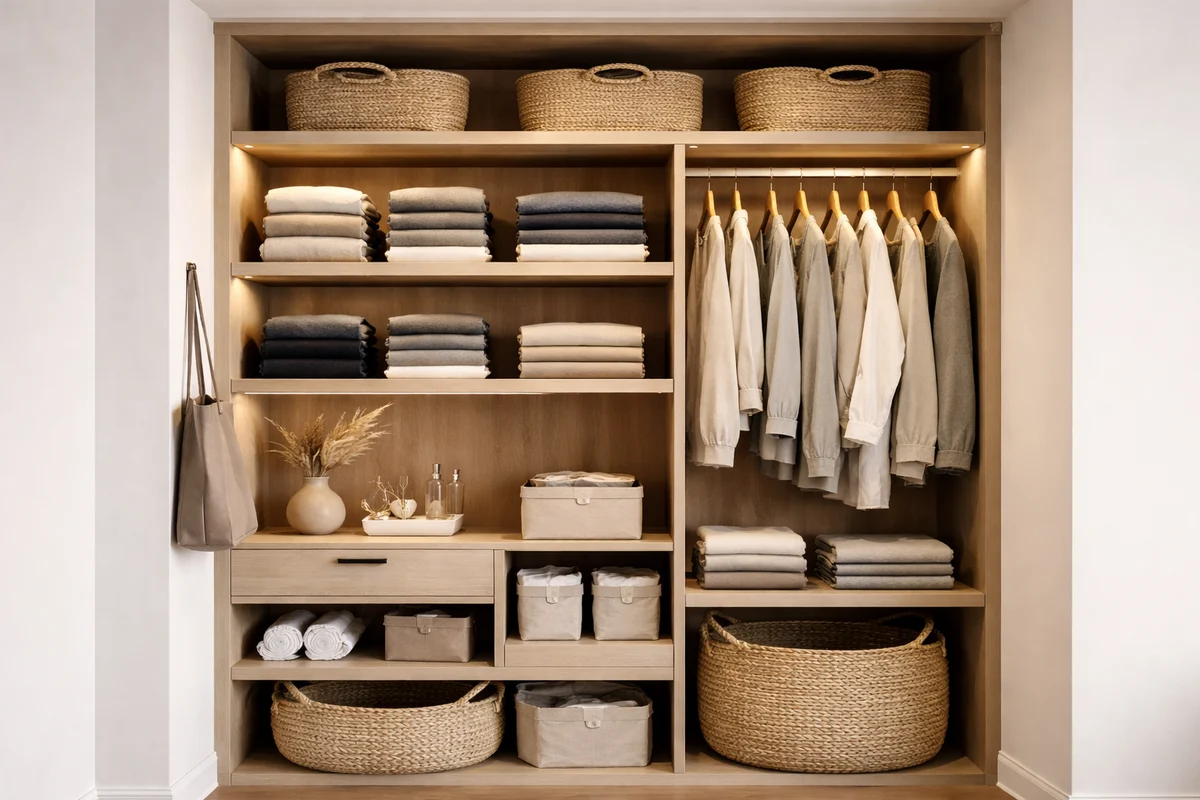
Topic Introduction
A small closet usually loses space in three places: the floor area stays unused, the vertical space above eye level becomes dead storage, and the “front zone” near the door becomes cluttered. Storage that works in a narrow closet treats items as a system with predictable access needs. For example, winter coats need hang space and airflow, while folded T-shirts need flat stacking and quick visibility. Shoes need a consistent landing spot so pairs do not migrate to the hallway. If you measure the closet first, you can plan for clearances around the door swing, the rod height, and any baseboard or vent.
Start with a simple inventory pass. Pull everything out, group items by category, and note which pieces you reach for weekly versus seasonally. Then measure the closet interior: width, depth, ceiling height, and the usable height under any obstructions. A tape measure helps, but a phone camera photo with a reference object (like a 12-inch ruler) often catches details you miss. I once used a cheap laser measure app on an iPhone (iOS 17.5) and still had to re-check one dimension because the closet wall was not perfectly square.
Main Problems And Pain Points
People often overestimate how much space they have and underestimate how much space they lose to thickness. Closet systems include shelf boards, bin walls, and rail brackets that add up quickly in tight depths. A “small” closet depth of 18–20 inches can feel even smaller once you account for hangers, door clearance, and the thickness of storage bins. If you ignore these offsets, you end up with items that cannot close the door or bins that scrape the wall.
Another common mistake is treating hanging and folding as interchangeable. Hanging works for garments that keep shape on a hanger, like jackets and dresses, but it wastes space for T-shirts and sweaters that fold well. Folding works for most knits and casual tops, but it fails when stacks become too tall and you start pulling from the middle. The supporting technology here is basic geometry: stack height, bin depth, and the “reach zone” from the door. A closet that is 24 inches deep can support deeper bins, while a 16-inch closet often needs shallower organizers and more vertical stacking.
Closet rods also create hidden constraints. Standard rods sit around 66 inches from the floor in many homes, but that height assumes typical adult reach and average garment length. If your closet has short ceilings or long coats, you need a different rod height or a double-rod setup. Double rods can increase capacity, yet they require careful hanger selection and enough clearance so sleeves do not tangle. A third pain point is door swing interference. A closet door that opens inward can block bins at the front edge, so the “front zone” needs either shallow storage or a layout that shifts bins deeper.
Solutions And Advice
Measure, Then Map Zones
Measure the closet and map it into zones: front access (near the door), mid-depth storage, and top vertical storage. Use a tape measure and record the usable depth at the front and back, since walls can bow slightly. Plan for door clearance by opening the door fully and marking where it hits. If you have a standard closet door that swings inward, keep the first 2–4 inches near the hinge side free of protruding bins. A quick sketch on paper works, but a spreadsheet with columns for “zone,” “item type,” and “max height” keeps you honest.
Set rod heights based on garment length. For example, if your longest coat measures about 52 inches from hanger hook to hem, you need rod placement that leaves clearance above for hangers and below for shoes. For folded items, aim for stack heights that you can lift without digging into the pile. Many people end up with stacks taller than 10–12 inches, then they pull from the bottom and collapse the stack. Lower stacks with more bins often beat one tall stack.
Use Vertical Storage Wisely
Vertical storage works when you separate “rarely used” from “daily used.” Top shelves should hold seasonal items, extra linens, or luggage that you reach a few times a year. Use clear bins or labeled baskets so you do not open multiple containers to find one item. If you use opaque bins, label the outside with category and size, like “Socks (M-L)” or “Winter Hats.” Clear labeling reduces rummaging, which reduces the chance that items migrate back to the floor.
For shelves, choose materials that handle weight. Particleboard shelves can sag under heavy loads, especially with bins that concentrate weight at the front edge. If you plan to store shoes or folded sweaters, weight is moderate; if you plan to store books or heavy bags, use stronger brackets and avoid overloading. A practical aside: I have seen closet shelves bow after repeated bin pulls when the shelf span was long and the brackets were spaced too far apart. If you cannot change the shelf span, reduce the load per shelf and distribute items across multiple levels.
Case Examples
Apartment Closet With Door Swing
An anonymized renter had a 20-inch-deep closet with an inward-swing door and a single rod. After removing everything, they measured the door clearance and found that bins placed within the first 3 inches scraped the door edge. They moved shoes to a side cubby rack and replaced the single rod with a double-rod setup using slim hangers. They used shallow bins on the top shelf for seasonal items and kept daily items in two labeled front bins. The closet looked less crowded because the front zone stayed clear, and the door closed without forcing items back.
Family Closet With Seasonal Rotation
A family closet held coats, school clothes, and sports gear with no separation by season. They created an “active” zone at eye level and a “seasonal” zone on the top shelf. They folded T-shirts into uniform stacks and placed them in bins labeled by person and type. They stored bulky sports items in a single large bin on the top shelf and moved it down only during the active season. After one rotation cycle, they reported fewer missing items and less floor clutter because the closet had fewer categories competing for the same shelf space.
Comparison Table Or Checklist
| Change | Best For | Trade-Off | What To Measure |
|---|---|---|---|
| Double Rod | Short garments and shirts | Hanger tangling if clearance is tight | Rod heights and hanger width |
| Shallow Bins | Front-zone organization | Less capacity per bin | Closet depth and door clearance |
| Top Shelf Rotation | Seasonal items | Requires a repeatable schedule | Usable height and bin access reach |
| Shoe Cubby Rack | Pairs that migrate to the floor | May not fit tall boots | Shoe height and closet depth |
Step-by-step checklist for a small closet refresh:
- Empty the closet and group items by category and frequency of use.
- Measure width, depth at the front and back, ceiling height, and door swing clearance.
- Decide your “active zone” (daily items) and “seasonal zone” (top shelf or higher bins).
- Choose one hanging strategy (single rod, double rod, or mixed) based on garment lengths.
- Pick bin sizes that match your reach so you can remove items without digging.
- Label bins and drawers with category and person, then test the layout for one week.
- Adjust after one cycle, since the first plan rarely matches real habits.
Common Mistakes
Buying organizers before measuring creates the most wasted money. Closet walls vary in squareness, and baseboards can prevent flush placement. A second mistake is overstuffing bins to the point that lids pop off or drawers jam. When storage becomes hard to use, people revert to floor piles because the friction is too high.
Another frequent error is mixing categories inside one bin. A “miscellaneous” bin grows quickly and defeats the point of labeling. If you keep small items together, use separate compartments for socks, underwear, and accessories so you can find what you need without dumping the bin. People also ignore hanger type. Standard bulky hangers waste width and cause sleeve overlap, which reduces usable hanging capacity even when the rod looks long enough.
Some closets also suffer from poor load distribution. Placing heavy items at the front edge of a shelf increases sag and makes bins harder to pull. If you store heavier items, distribute them across the shelf and avoid concentrating weight in one spot. Finally, many people skip the seasonal rotation step. Without rotation, top shelves become permanent clutter and the closet never regains a compact “active” layout.
FAQ
How Do I Measure Closet Space?
Measure width, depth, and height, then measure door swing clearance with the door fully open. Record usable depth at the front and back because walls often vary slightly. Note any obstructions like vents, baseboards, or built-in shelves.
What Rod Height Works Best?
Use garment length as the anchor: place the rod so hems clear the floor and hangers do not hit the shelf above. For short items, keep enough clearance to slide hangers in without snagging. For long coats, use a single higher rod or a mixed setup.
Which Hangers Save Space?
Slim hangers reduce width and sleeve overlap, which increases usable hanging capacity. Choose hangers that match garment type so heavy coats do not slip and light shirts do not fall. Avoid hangers that force you to crowd garments together.
How Should I Store Shoes In Small Closets?
Use a cubby rack or tiered rack that matches your shoe heights. Keep tall boots in a separate area so they do not block access to smaller pairs. Store shoes in consistent positions so you do not re-stack them each time.
How Often Should I Rotate Seasonal Items?
Rotate when the weather pattern changes and your active wardrobe shifts, typically twice per year. Move off-season items to top shelves or a separate storage location and keep the closet focused on current use. A rotation schedule prevents top storage from turning into permanent clutter.
Author's Insight
Small-closet storage works best when it treats space as a set of constraints: door clearance, reach distance, hanger thickness, and shelf load. The most reliable improvements come from measuring first, then matching storage types to item behavior—hanging for shape-sensitive garments, bins for uniform categories, and top shelves for infrequent access. Labeling and seasonal rotation reduce rummaging, which keeps the system stable after the first week. If you want a quick starting point, plan one “active zone” and one “seasonal zone,” then adjust based on what you actually reach for.
Key Takeaways
- Measure door swing and usable depth before buying organizers.
- Separate active items from seasonal items to keep the closet compact.
- Use slim hangers and a rod layout matched to garment lengths.
- Choose shallow bins and labeled drawers for front-zone access.
- Distribute weight on shelves and avoid overstuffing bins.